
Quick answer
FOB and DDP describe who arranges and pays for which leg of the journey — they do not describe what the equipment costs you. The same machine can quote 40% apart under the two terms and land at your door within 5% of each other. Compare quotes only after converting both to a single landed-cost line, and check who is named as Importer of Record.
Why two suppliers quote the same machine 40% apart
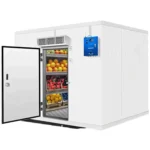
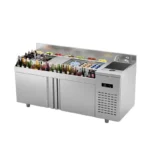
A 4-door refrigerated workbench, a hood-type dishwasher, a rotary rack oven — the FOB number is the price of the box on the quay. Everything after that is a separate contract: ocean freight, insurance, terminal handling, customs entry, duty, port fees, inland trucking, unloading, and the last 30 metres into the kitchen.
Two sellers can be honest and still quote 40% apart because one is quoting a box on a quay in Qingdao and the other is quoting a box delivered to a restaurant in Lagos or Rotterdam. Neither number is wrong. They are answers to different questions.
The problem starts when a buyer compares them as if they were the same question.
What each term actually transfers
Incoterms 2020 defines 11 rules. For equipment buyers, six matter. This table is the one to keep open while reading quotes.
| Rule | Seller pays to | Risk passes | Import clearance | Duty & import VAT |
|---|---|---|---|---|
| EXW | Your factory floor | At your factory | Buyer | Buyer |
| FCA | Named place (often the forwarder’s terminal) | On handover to carrier | Buyer | Buyer |
| FOB | On board the vessel at origin port | Once goods are on board | Buyer | Buyer |
| CFR | Ocean freight to destination port | On board at origin | Buyer | Buyer |
| CIF | Freight + minimum insurance to destination port | On board at origin | Buyer | Buyer |
| DAP | Delivery to named place, not unloaded | At destination, before unloading | Buyer | Buyer |
| DDP | Delivery to named place, import cleared | At destination, before unloading | Seller | Seller |
Two things this table makes obvious, and one it hides.
Obvious #1: CIF does not mean “insured to my door”. Cover under CIF defaults to Institute Cargo Clauses (C), a narrow level of cover; ICC reserves the higher Clause (A) default for CIP. If you want real cover, it has to be written into the contract, not assumed from the three letters.
Obvious #2: DDP is the only rule where the seller carries import clearance and duty. That is why DDP quotes look high — they are absorbing a cost the FOB seller never sees.
Hidden: under DAP the seller delivers but does not unload. Under the closely related DPU, the seller does unload. A pallet of stainless steel worktables that “arrived” but is still strapped inside a container on the chassis is, under DAP, correctly delivered. The unloading cost is yours.
The rule most buyers are using incorrectly: FOB for containers
This is the part that quietly costs money on almost every equipment order.
FOB was written for bulk and break-bulk cargo — goods swung over the ship’s rail. Equipment ships in containers. The ICC has recommended Free Carrier (FCA) instead of FOB for containerised cargo since 2010, and revised FCA in Incoterms 2020 specifically to handle the bill-of-lading problem that made sellers resist the switch.
The practical consequence: under FOB, your risk transfers when the container is on board, but the container is usually packed and handed over at a terminal hours or days earlier. If the box is damaged in the yard between gate-in and loading, you are arguing about a gap the rule never intended to create. Under FCA, risk transfers at handover to the carrier and the gap closes.
FOB is not wrong because it is expensive. It is wrong because it was designed for a different kind of cargo.
What “DDP door” usually does not include
DDP solves customs, not delivery. The gap between “at the door” and “running” is where equipment projects go wrong, and it is rarely priced.
| Item | Usually included in DDP? | Why it matters |
|---|---|---|
| Ocean freight + destination charges | Yes | — |
| Import clearance + duty | Yes | Confirm who is Importer of Record |
| Inland trucking to address | Yes, if the address is reachable | Check for weight limits and access hours |
| Liftgate | Often no | A 300 kg workbench does not come off a standard tail-lift |
| Inside delivery / unpacking | Often no | Kerbside is the default |
| Positioning in the kitchen | No | Needs a plan and a crew |
| Electrical / gas / water connection | No | Needs a licensed local trade |
| Commissioning and staff handover | No | This is the step that decides whether the equipment earns |
| Packaging removal | No | Becomes your waste cost |
A DDP price that stops at the kerb is not a turnkey price. If the project includes a cold room, a dish line and a cooking suite, the difference between kerbside and commissioned is routinely the largest single line the quote never mentions.
Build a landed-cost sheet before you compare anything
Nine lines. Any supplier can fill them; if one will not, that is information.
- Equipment subtotal — itemised by model, not a lump sum
- Packing — crates for stainless, foam and corner protection for glass doors
- Inland haulage to port + export clearance (under FOB/FCA this is inside the seller’s price; under EXW it is yours)
- Ocean freight — per container or LCL per cubic metre
- Marine insurance — confirm the clause level, (C) or (A)
- Duty — driven by HS code; ask for the code in writing before you order
- Import VAT / sales tax — often recoverable, but it is cash out first
- Destination charges — terminal handling, THC, documentation, ISPS
- Last-mile, unloading, positioning, connection, commissioning
Divide the total by the number of units and you get cost per installed unit — the only number that compares across two quotes.
Worked shape, not a price: if line 1 is 100 and lines 2–9 add 35, the order is a 35% adder, regardless of which Incoterm the seller wrote at the top of the page. Two sellers quoting 100 and 118 FOB can easily land at 135 and 137.
Three failure modes that show up after the container arrives
1. Nobody checked who the Importer of Record is. On a US-bound shipment the IOR is legally responsible for the accuracy of the entry — value, classification, origin — even when the seller arranged everything. If a DDP quote names a company you have never heard of as IOR, ask why before the cargo sails, not after.
2. The HS code was chosen for the cheapest duty, not the correct one. Duty follows classification. A mis-declared code is not a saving; it is a liability that surfaces at audit, and it can surface years later.
3. Security filing was left to the last minute. For US ocean cargo, the Importer Security Filing (“10+2”) has been mandatory since 26 January 2009; non-compliance carries monetary penalties, increased inspections and cargo delay. It is filed before loading, which means the information has to exist before the container is sealed — not when it reaches the port.
A decision rule by buyer type
| Your situation | Sensible default | Why |
|---|---|---|
| First container, no customs presence in the destination country | DDP, with a written scope of what is included | Removes a compliance step you cannot yet run |
| Existing distributor with a customs broker and a bond | FCA or FOB, buy freight yourself | You already pay for the freight expertise; don’t pay a margin for it twice |
| Multi-country rollout with staged deliveries | DAP per site, duty handled centrally | Keeps duty visible and auditable in one place |
| Project with installation and commissioning | DDP to kerb + separate installation contract | Never bundle commissioning into a goods price; you lose the ability to hold anyone to a schedule |
The pattern: use DDP to buy capability you don’t have, and FCA/FOB to buy capability you already have. Paying a DDP margin on freight you could book yourself is not risk transfer, it is a fee.
What to put in the purchase order
Incoterms govern delivery, cost and risk. They do not govern title, payment terms, warranty or installation — those need their own clauses. A purchase order for equipment should state:
- The rule and the named place, written precisely:
DAP 12 Harbour Road, Mombasa, Kenya, notDAP Mombasa - The HS code in writing, with the country of origin
- Who is Importer of Record, by legal entity name
- Insurance clause level, (A) or (C)
- What “delivery” means at your site — kerb, ground floor, or positioned and connected
- Unloading responsibility and equipment available on site
- Commissioning scope, duration and who supplies utilities
- Spare parts list and warranty start date — from delivery or from commissioning, they are different dates
That last line is worth more than it looks. A warranty that starts at delivery can expire before the kitchen opens.
FAQ
Is DDP always more expensive than FOB?
No. DDP includes costs FOB excludes, so the headline is higher, but the landed total can be lower — the seller may have cheaper freight and a better customs relationship than you can buy alone. Compare landed totals, never headlines.
Can I use DDP if I want to claim import VAT?
Usually yes, but only if your company is named on the import documents. If the seller is the Importer of Record, the VAT recovery right may sit with them, not you. Confirm this before ordering, particularly in the EU and UK.
Does DDP mean the seller handles warranty locally?
No. DDP is a delivery term. Warranty, spare parts and service are separate contractual obligations and should be written separately.
Why do some sellers refuse FCA and insist on FOB?
Historically because FCA made it harder to obtain an on-board bill of lading for letters of credit. Incoterms 2020 revised FCA to solve this, so the objection is now mostly habit.
Is CIF safer because insurance is included?
Not automatically. CIF’s default cover is Institute Cargo Clauses (C), which excludes many partial-loss scenarios. Specify Clause (A) if you need real cover.
Do Incoterms decide when I own the goods?
No. The ICC rules cover delivery, cost, risk and customs formalities. Title transfer and payment are set by your contract, not by the three-letter term.
How we quote equipment orders
Zhongji Metal builds stainless steel commercial kitchen and refrigeration equipment in Shandong, China, and ships to buyers across Europe, the Americas, Africa, the Middle East and Southeast Asia.
We quote FOB as standard and DDP on request, and we publish the HS code on the quotation rather than after the fact — because a duty surprise three weeks after the container lands costs more than the transparency does. For projects that include a cold room, a dish line or a full cooking suite, we separate the equipment price from freight and from commissioning, so each line can be tested on its own.
If you are comparing two quotes and the totals do not reconcile, send both. The gap is usually one of the nine lines above.
Sources
- International Chamber of Commerce, Incoterms® 2020 — 11 rules; FCA revision for on-board bills of lading; DAP/DPU unloading distinction. https://iccwbo.org/business-solutions/incoterms-rules/incoterms-2020/
- U.S. Customs and Border Protection, Importer Security Filing “10+2” — rule effective 26 January 2009; penalties, inspections, delay for non-compliance. https://www.cbp.gov/border-security/ports-entry/cargo-security/importer-security-filing-102
- ICC, Using the Incoterms® 2020 rules to manage tariff risk in international trade (24 April 2025). https://iccwbo.org/news-publications/rules/using-the-incoterms-2020-rules-to-manage-tariff-risk-in-international-trade/
Author: China Zhongji Metal
WhatsApp: +86 190 5035 2733
Website: https://zhongjimetal.com
Alibaba.com: https://zhongjimetal.en.alibaba.com