

Commercial kitchens in 2025 are undergoing a tech-driven revolution, prioritizing efficiency, sustainability, and data-informed operations to handle high-volume demands while cutting costs and waste. Drawing from industry reports and expert analyses, here are the top smart trends shaping these spaces:
1.IoT-Enabled Smart Appliances
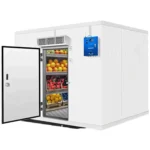
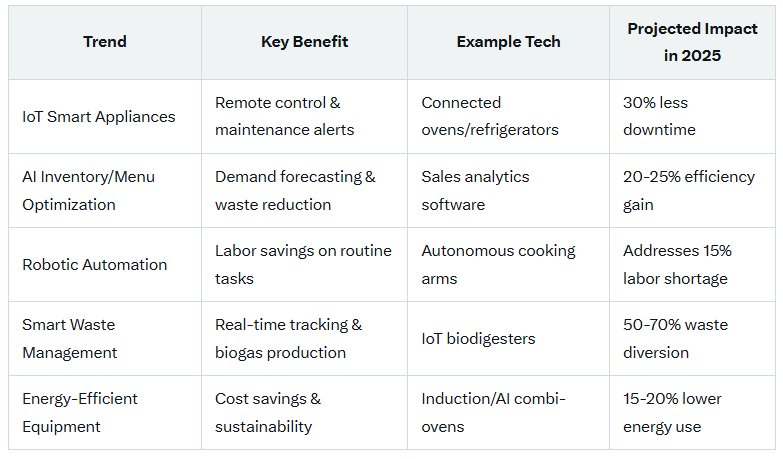
Kitchens are integrating Internet of Things (IoT) devices into core equipment like ovens, refrigerators, and cooktops. These allow remote monitoring, real-time temperature adjustments, and predictive alerts for maintenance, reducing downtime by up to 30% in high-traffic settings. For instance, smart fridges track inventory levels and expiration dates, automatically reordering supplies via connected platforms.
2. AI-Driven Inventory and Menu Optimization
Artificial intelligence is streamlining backend operations by analyzing sales data, customer preferences, and waste patterns to forecast demand and suggest menu tweaks. Tools like AI-powered software predict peak hours, optimize staffing, and minimize overproduction—key for restaurants facing fluctuating traffic. This trend is projected to boost operational efficiency by 20-25% in 2005
3. Robotic Automation for Repetitive Tasks
Robots are handling labor-intensive jobs such as dish preparation, grilling, and even full meal assembly, with systems like Moley Robotics enabling autonomous cooking of diverse dishes. In commercial setups, these bots integrate with IoT for seamless workflows, freeing staff for creative roles and addressing labor shortages amid rising costs.
4. Smart Waste Management Systems
Biodigesters and connected composters, like those from LFC, use sensors to monitor food waste in real-time, linking to cloud dashboards for trend analysis and sustainability reporting. These systems not only reduce landfill contributions by 50-70% but also generate biogas for on-site energy, aligning with eco-regulations and appealing to green-conscious operators.
5. Energy-Efficient and Predictive Smart Equipment
With energy costs surging, appliances featuring induction tech, combi-ovens, and AI-optimized power usage are standard. Over 46% of commercial users prioritize these for their ability to cut bills by 15-20% while predicting failures via data analytics. ENERGY STAR-certified models with remote diagnostics are especially popular in urban, space-constrained kitchens.
These trends reflect a broader shift toward "intelligent kitchens" that blend human ingenuity with automation, driven by a market expected to grow at 18.5% CAGR through 2033. For operators, investing here isn't just innovative—it's essential for competitiveness in a post-pandemic era of tight margins and eco-mandates.